The Phlegmatic Temperament
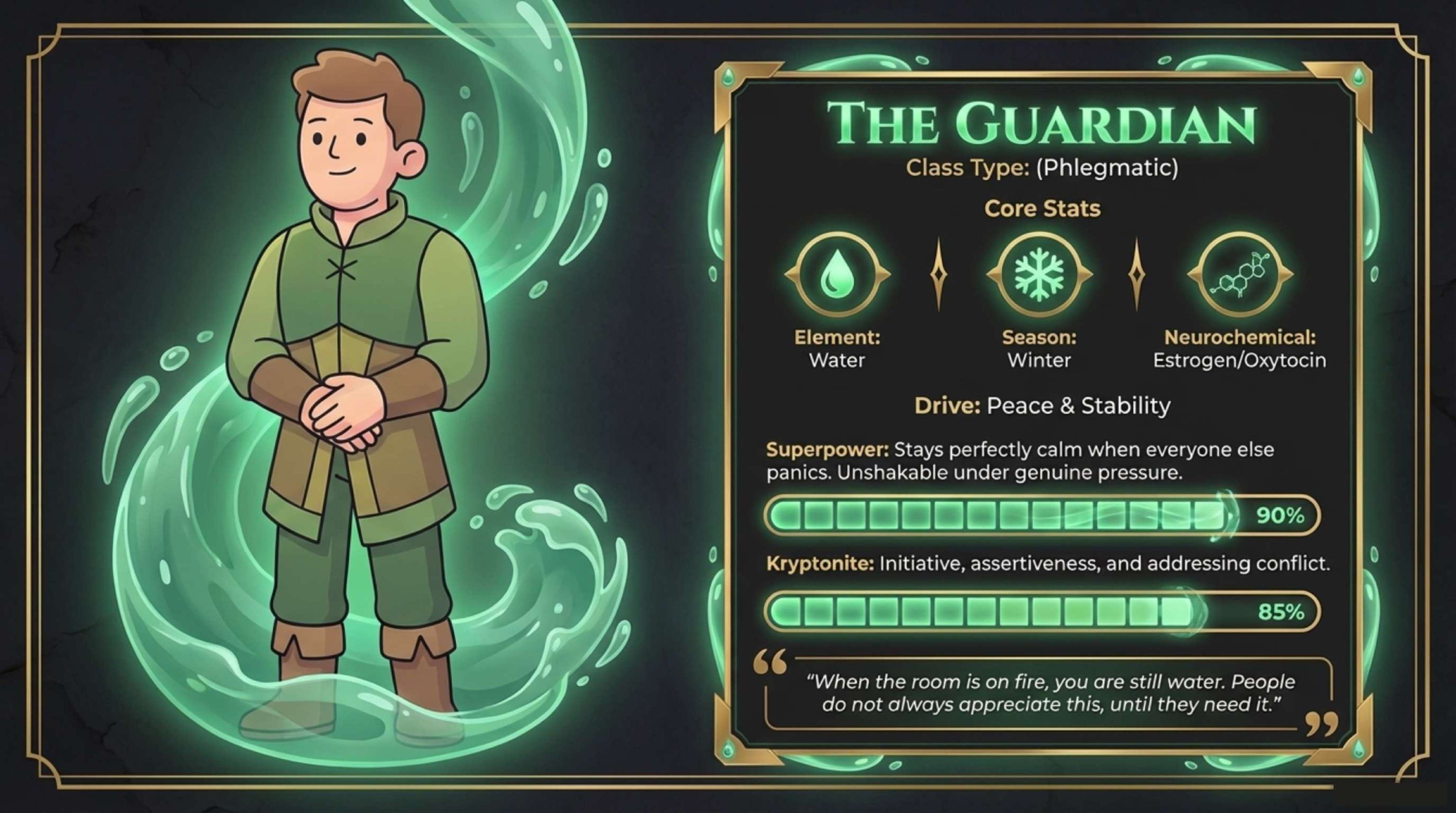
Definition: The Phlegmatic temperament is characterized by calmness, loyalty, and peaceful disposition. Phlegmatics are introverted supporters who excel at creating harmony, maintaining stability, and building deep, lasting relationships.
Gentle, steady, and profoundly loyal, the Phlegmatic personality creates harmony wherever they go. These peaceful supporters excel at building trust and maintaining stable, nurturing environments. For 2,500 years, this temperament has been the steady anchor of families, teams, and communities.

Green
Color Association
Water
Classical Element
Winter
Season
Harmony
Core Need
Understanding the Phlegmatic Temperament
The Phlegmatic temperament represents the peaceful stabilizer in the four-temperament tradition. Named from Greek "phlegma" (phlegm), ancient physicians connected the label with water, coldness, and moisture. FourType keeps the name as historical language, not as a claim about modern biology.
In modern trait language, some Phlegmatic behavior overlaps with agreeableness, patience, and emotional steadiness. That overlap is only a loose comparison: FourType is a reflection framework, not a clinical test, hiring tool, or replacement for validated personality assessment.
What distinguishes Phlegmatics is their orientation toward harmony and relationships. While Cholerics ask "What needs to be done?" and Sanguines ask "Who's coming?" Phlegmatics ask "Is everyone okay?" This makes them invaluable in any endeavor requiring teamwork, but challenging in environments that require rapid change or aggressive competition.
Quick Answer: Am I Phlegmatic?
You may be Phlegmatic if your default response to pressure is to steady the room, reduce conflict, and keep people connected. The quiz is most useful when you compare that calm with how directly you name needs, make decisions, and handle tension.
- •Steadiness-first: notices tension, pace, safety, and whether people can keep going.
- •Loyal and patient: builds trust through consistency rather than intensity.
- •Harmony-oriented: often absorbs pressure so a group or relationship feels calmer.
- •Growth edge: naming needs, making decisions, and addressing conflict before resentment builds.
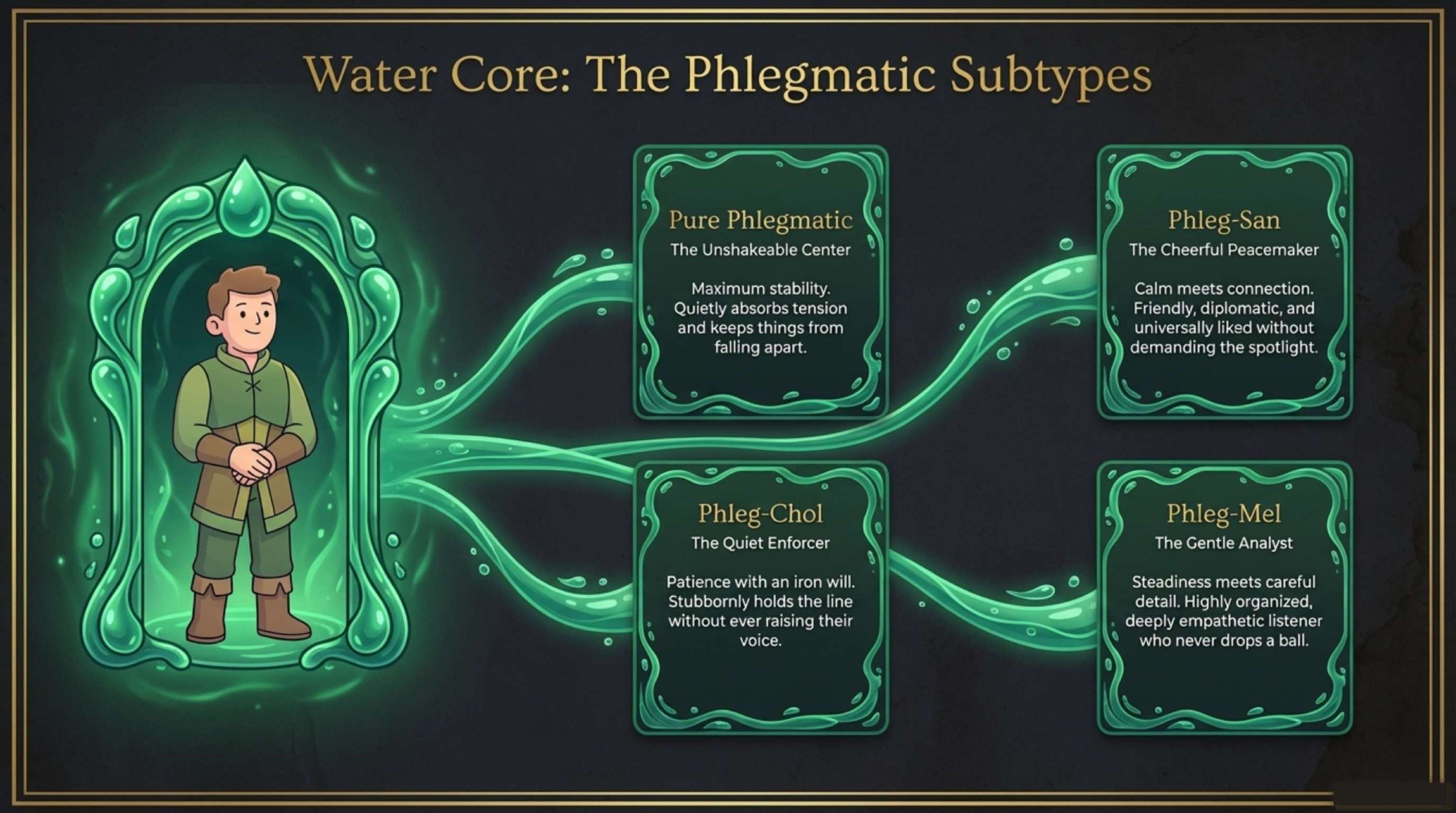
Phlegmatic Subtypes
Your secondary temperament changes how Phlegmatic steadiness is expressed. Use these subtype paths after the quiz to avoid flattening your result into only quietness or passivity.
Pure Phlegmatic
Calm, loyal, and most motivated by dependable peace and relational safety.
Phlegmatic-Sanguine
Steady support plus social warmth: easygoing, friendly, and reassuring.
Phlegmatic-Choleric
Calm patience plus firmer action: supportive, practical, and more direct under pressure.
Phlegmatic-Melancholic
Peaceful steadiness plus depth: thoughtful, careful, and quietly exacting.
Calm and peaceful
Loyal and dependable
Cooperative team player
Patient listener
Avoids conflict
Steady and reliable
Supportive nature
Diplomatic and tactful
The Phlegmatic Under Stress
When Phlegmatics face prolonged stress, their peaceful nature can turn inward. The same steadiness that creates stability can become stubbornness, and their conflict avoidance can lead to suppressed resentment.
Stress Warning Signs
- •Withdrawal and isolation
- •Passive-aggressive behavior
- •Increased stubbornness
- •Hidden resentment building
- •Physical symptoms: fatigue, lethargy
- •Avoidance of all decisions
- •Saying yes but meaning no
Healthy Coping Strategies
- ✓Gentle exercise: walking, yoga
- ✓Time in nature for restoration
- ✓Trusted one-on-one conversations
- ✓Small boundary-setting practice
- ✓Journaling to process emotions
- ✓Regular self-care routines
- ✓Addressing issues before they fester
Phlegmatics in Relationships
Understanding how Phlegmatics approach love reveals their profound capacity for loyal, nurturing connection.
Romantic Relationships
Phlegmatics are steady, loyal partners who show love through consistent presence and support. They create stable, peaceful home environments and prioritize their partner's comfort.
Best matches: Choleric (adds drive to their calm), Sanguine (brings energy and fun), or Phlegmatic (shared tranquility and understanding).
Friendships
Phlegmatics are loyal, low-maintenance friends who are always there when needed. They prefer quality over quantity and maintain friendships for life.
Challenge: May not initiate contact often, leading friends to wonder if they care. They do—deeply.
As Parents
Patient, nurturing parents who create calm, secure homes. They support children's development without pressure and model emotional stability.
Growth area: Setting boundaries and following through on discipline, not avoiding conflict with children.
In the Workplace
Reliable team members who create harmony and keep things running smoothly. They excel at routine tasks and mediating conflicts.
Challenge: May be overlooked for promotions due to not self-advocating or taking initiative.
Best Careers for Phlegmatics
Phlegmatics thrive in careers requiring patience, interpersonal skills, and steady reliability.
Human Resources
Natural mediators who build trust and create positive workplace cultures.
Counseling & Therapy
Patient listeners who create safe spaces for others to share and heal.
Nursing & Healthcare
Caring, steady presence that calms patients and supports families.
Teaching & Education
Patient educators who create nurturing learning environments.
Social Work
Compassionate advocates who support vulnerable populations.
Administrative Roles
Reliable organizers who keep operations running smoothly.
Customer Service
Patient problem-solvers who de-escalate and satisfy customers.
Team Coordination
Natural facilitators who bring people together and maintain harmony.
Growth Strategies for Phlegmatics
Your steadiness is a gift. These practices help you take initiative while maintaining your peaceful core.
Starting something new—a class, hobby, or skill—that interests you
Advocating for yourself rather than letting resentment build
Jumping into conversations and sharing your ideas
Matching the energy of others when appropriate
Trusting your abilities and remembering past successes
Responding with enthusiasm when excited
Volunteering to lead or be the point person
Committing to deadlines and meeting them
Expressing preferences when offered choices
Explaining you need time to think, rather than going silent
Staying present until conflicts are fully resolved
Vocalizing your appreciation of others
How to Support a Phlegmatic
Knowing someone's temperament helps you connect with them more effectively.
Do This to Build Them Up
- ▶Let them do one task at a time
- ▶Be kind in your criticism
- ▶Ask their thoughts and feelings
- ▶Show curiosity about their interests
- ▶Encourage their involvement gently
- ▶Listen completely without interrupting
- ▶Give them time to process
- ▶Handle conflict calmly and quietly
Avoid These Behaviors
- ▶Expecting things on your timeline
- ▶Pushing their involvement aggressively
- ▶Not listening when they speak up
- ▶Mistaking quiet for apathy
- ▶Speaking down to them
- ▶Stressing them with demands
- ▶Assuming they know how you feel
Frequently Asked Questions
Sources and Model Notes
FourType uses the classical temperament names as a self-reflection framework. It does not claim the ancient humour theory is modern biology, and it should not replace validated clinical or occupational assessments.
Learn More
Deep Dive: The Phlegmatic
Extended article exploring the Guardian's psychology and potential.
15 Temperament Blends
Discover Phlegmatic-Choleric, Phlegmatic-Sanguine, and other profiles.
Take the Temperament Quiz
40 questions to discover your unique temperament blend.
History of Temperaments
From Hippocrates to modern psychology—2,500 years of wisdom.
Discover Your Temperament
Take our free 40-question quiz to discover your unique temperament blend and unlock personalized insights.
Start the Free Quiz