The Melancholic Temperament
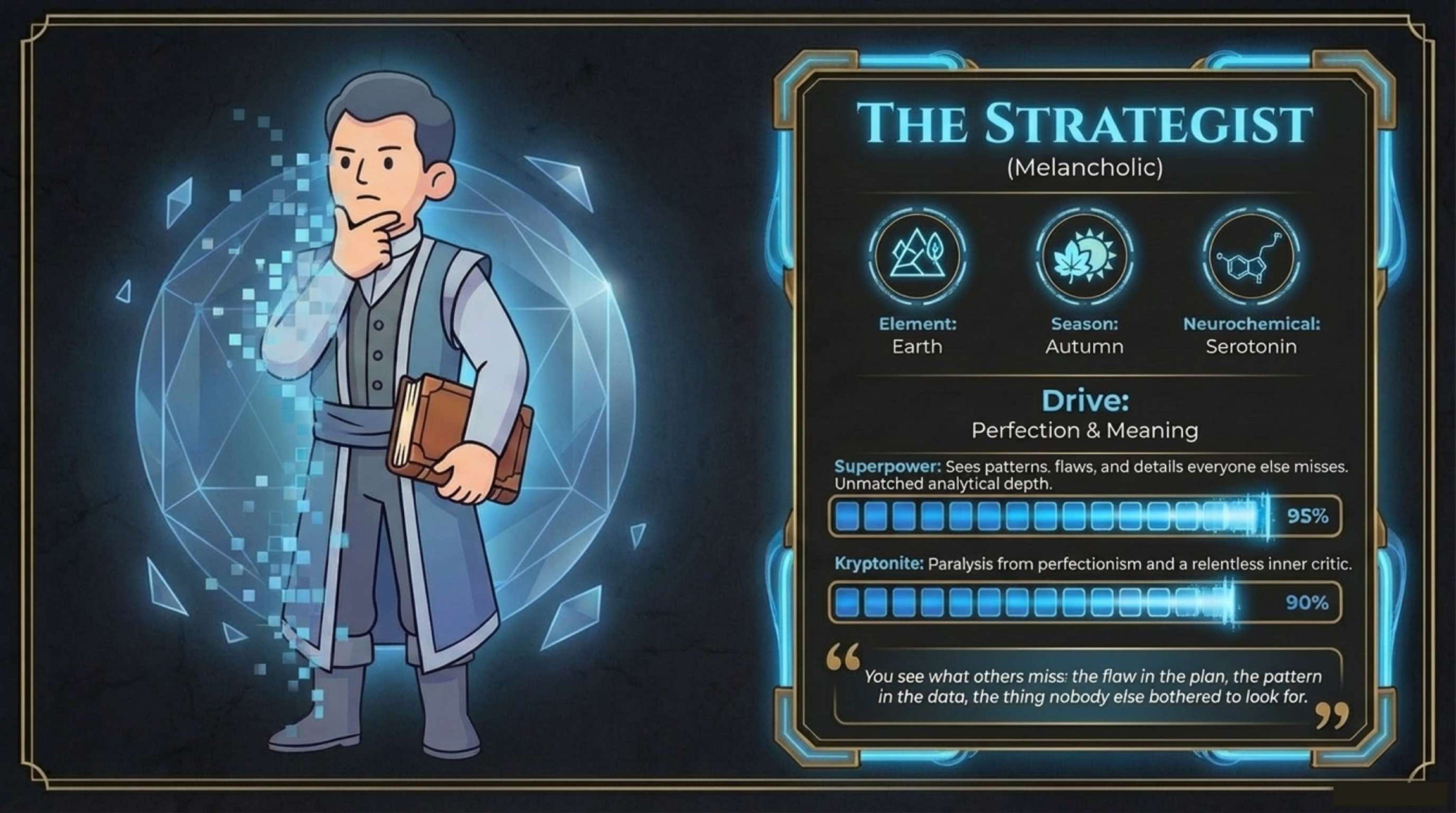
Definition: The Melancholic temperament is characterized by analytical thinking, perfectionism, and deep introspection. Melancholics are introverted thinkers who excel at detailed work, maintain high standards, and see patterns others miss.
Contemplative, analytical, and deeply thoughtful, the Melancholic personality excels at understanding complexity. These introspective strategists often create meaningful work through careful deliberation, precise standards, and the patience to see what others miss.

Blue
Color Association
Earth
Classical Element
Autumn
Season
Perfection
Love Language
Understanding the Melancholic Temperament
The Melancholic temperament represents the thoughtful analyst in humanity's personality spectrum. Named from Greek "melaina chole" (black bile), ancient physicians believed this temperament resulted from this bodily humor, associating it with earth, coldness, and dryness—fitting metaphors for the Melancholic's grounded, measured approach to life.
The ancient humour theory is history, not modern biology. In modern trait language, some Melancholic patterns loosely overlap with conscientiousness, emotional sensitivity, and a preference for careful planning. FourType is still a reflection framework, not a clinical test, hiring tool, or replacement for validated personality assessment.
What distinguishes Melancholics is their orientation toward quality and meaning. While Sanguines ask "Is this fun?" and Cholerics ask "Is this done?" Melancholics ask "Is this right?" This makes them invaluable in any endeavor requiring excellence, but challenging in environments that prioritize speed over substance.
Quick Answer: Am I Melancholic?
You may be Melancholic if your default response to pressure is to slow down, check the details, protect quality, and search for the deeper meaning. The quiz is most useful when you compare that instinct with how you handle criticism, deadlines, relationships, and imperfect choices.
- •Depth-first: notices accuracy, risk, meaning, and missing details before moving fast.
- •Standards-driven: wants work, relationships, and choices to be thoughtful and well made.
- •Reflective: often needs time alone to process emotions, plans, and decisions clearly.
- •Growth edge: sharing work earlier, softening self-critique, and acting before everything feels perfect.
Melancholic Subtypes
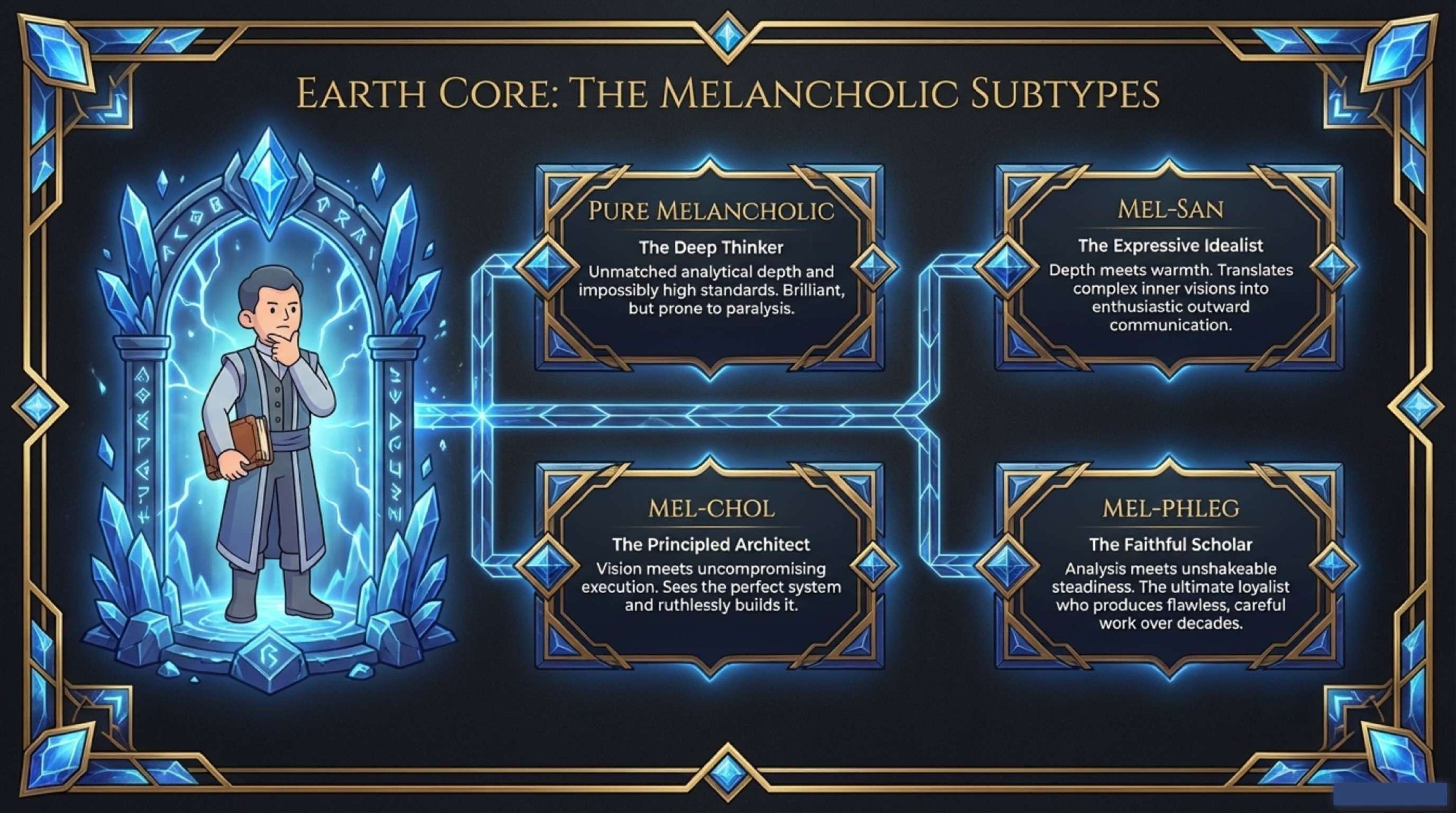
Your secondary temperament changes how Melancholic depth is expressed. Use these subtype paths after the quiz to avoid flattening your result into only sadness, perfectionism, or introversion.
Pure Melancholic
Depth, precision, and private standards with the least modifying influence from another temperament.
Melancholic-Sanguine
Reflective depth plus expression: imaginative, emotionally textured, and more socially open.
Melancholic-Choleric
Standards plus drive: strategic, exacting, and more willing to confront problems directly.
Melancholic-Phlegmatic
Careful depth plus steadiness: loyal, patient, quietly exacting, and harmony-aware.
Analytical and thoughtful
Detail-oriented perfectionist
Introverted and reserved
Deep thinker
Values quality over quantity
Sensitive and empathetic
Organized planner
Seeks meaning and depth
The Melancholic Under Stress
When Melancholics face prolonged stress, their strengths can become liabilities. The same analytical mind that solves complex problems can spiral into anxiety and paralysis.
Stress Warning Signs
- •Social withdrawal and isolation
- •Increased self-criticism and negative self-talk
- •Analysis paralysis—unable to decide
- •Heightened anxiety and worry
- •Pessimism and hopelessness
- •Physical symptoms: insomnia, tension
- •Becoming hypercritical of others
Healthy Coping Strategies
- ✓Structured problem-solving sessions
- ✓Creative outlets (art, music, writing)
- ✓Talking with a trusted confidant
- ✓Physical exercise and movement
- ✓Setting "good enough" standards
- ✓Mindfulness to break overthinking
- ✓Scheduled worry time (then stop)
Melancholics in Relationships
Understanding how Melancholics approach love reveals their profound capacity for deep, meaningful connection.
Romantic Relationships
Melancholics are deeply loyal partners who show love through thoughtful gestures, remembering details, and quality time. They seek profound connection over surface-level romance.
Best matches: Phlegmatic (peaceful stability), Sanguine (lighten their seriousness), or Melancholic (shared depth and standards).
Friendships
Melancholics prefer few deep friendships over many superficial ones. They are loyal friends who remember important details and offer thoughtful support.
Challenge: May withdraw when hurt instead of communicating, and can be seen as distant or aloof.
As Parents
Thoughtful, involved parents who notice children's emotional needs and create structured, nurturing environments. They invest deeply in their children's development.
Growth area: Relaxing perfectionist standards and allowing children to make mistakes and learn.
In the Workplace
Reliable team members who produce high-quality work and catch details others miss. They excel at analysis, planning, and maintaining standards.
Challenge: May struggle with criticism, tight deadlines, and environments that don't value quality.
Best Careers for Melancholics
Melancholics thrive in careers requiring precision, depth, and quality where their attention to detail is valued.
Research & Science
Deep analysis and methodical investigation align perfectly with Melancholic strengths.
Software Development
Complex problem-solving and attention to code quality suit this temperament.
Accounting & Finance
Precision, detail-orientation, and systematic processes are natural fits.
Academic Careers
Deep expertise, research, and thoughtful analysis thrive in academia.
Quality Assurance
Finding flaws others miss and maintaining high standards is a Melancholic strength.
Writing & Journalism
Careful research, thoughtful analysis, and meaningful communication.
Psychology & Counseling
Deep empathy and analytical understanding of human nature.
Engineering
Precision, systematic thinking, and complex problem-solving.
Growth Strategies for Melancholics
Your depth is a gift. These practices help you share your gifts with the world while avoiding common Melancholic pitfalls.
Smiling more, lightening up, responding optimistically
Being grateful and counting your blessings
Reflecting back what others say to confirm understanding
Turning in projects when they are good enough
Coming up with a Plan B when feeling anxious
Accepting invitations and joining in
Captivating negative thoughts with helpful truths
Responding with trust rather than suspicion
Speaking up to share your ideas
Being flexible about changes to plans
Sharing your creative talents graciously
Forgiving others and releasing grudges
How to Support a Melancholic
Knowing someone's temperament helps you connect with them more effectively.
Do This to Build Them Up
- ▶Notice when they need support
- ▶Keep their secrets and confidences
- ▶Encourage their creative expression
- ▶Be sensitive to their emotions
- ▶Help them feel safe to share
- ▶Help formulate backup plans
- ▶Make eye contact when they speak
- ▶Believe in them and their abilities
Avoid These Behaviors
- ▶Dismissing their emotions
- ▶Not giving enough details
- ▶Infringing on their space and silence
- ▶Joining their negative spiral
- ▶Changing schedules without notice
- ▶Making them feel guilty for needs
- ▶Interrupting their thoughts
Frequently Asked Questions
Sources and Model Notes
FourType uses the classical temperament names as readable pattern language. The ancient humour explanations are historical context, not current biology. Modern trait references are included as loose comparisons only.
Learn More
Deep Dive: The Melancholic
Extended article exploring analytical psychology and perfectionism.
15 Temperament Blends
Discover Melancholic-Choleric, Melancholic-Phlegmatic, and other profiles.
Take the Temperament Quiz
40 questions to discover your unique temperament blend.
History of Temperaments
From Hippocrates to modern psychology—2,500 years of wisdom.
Discover Your Temperament
Take our free 40-question quiz to discover your unique temperament blend and unlock personalized insights.
Start the Free Quiz